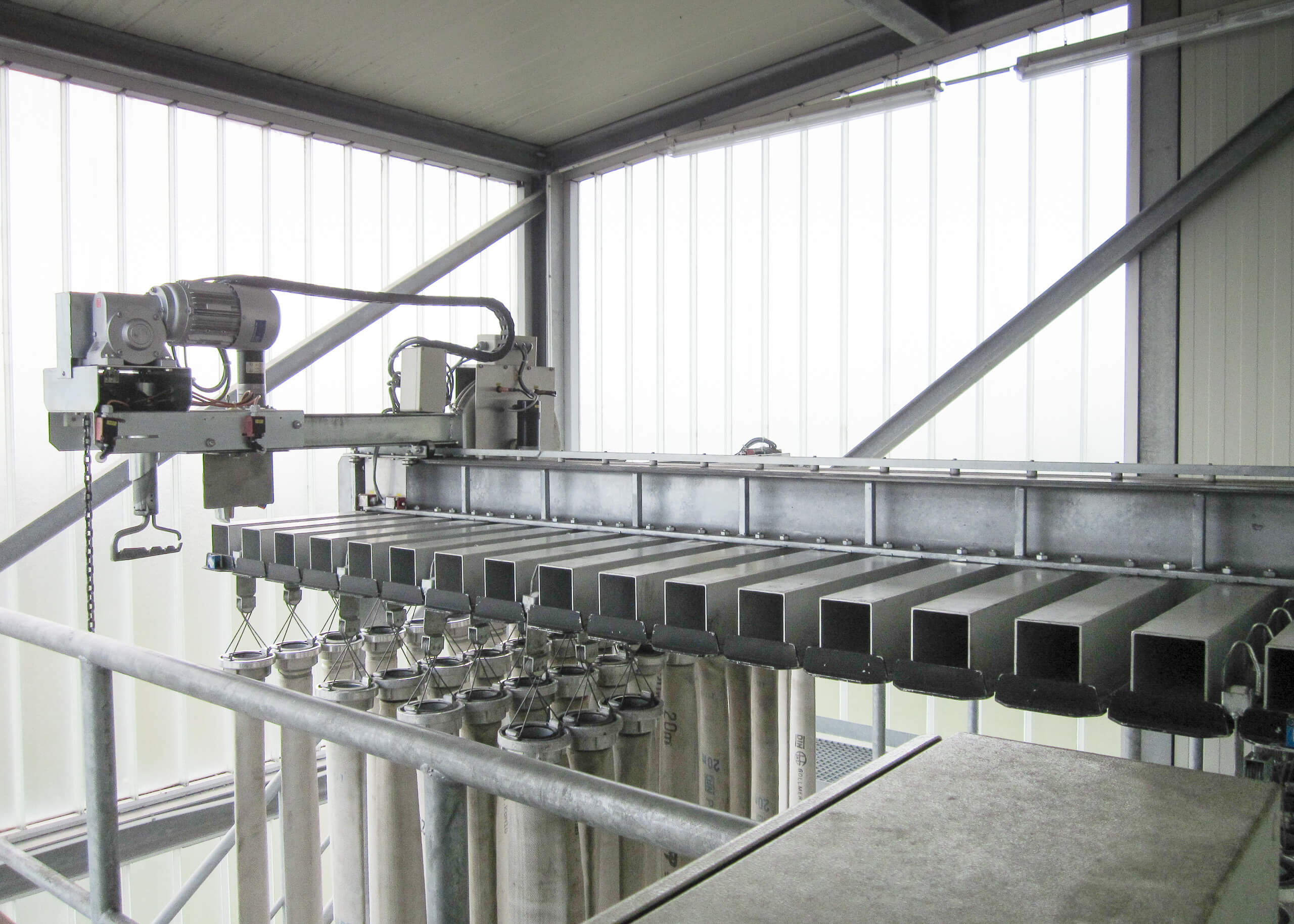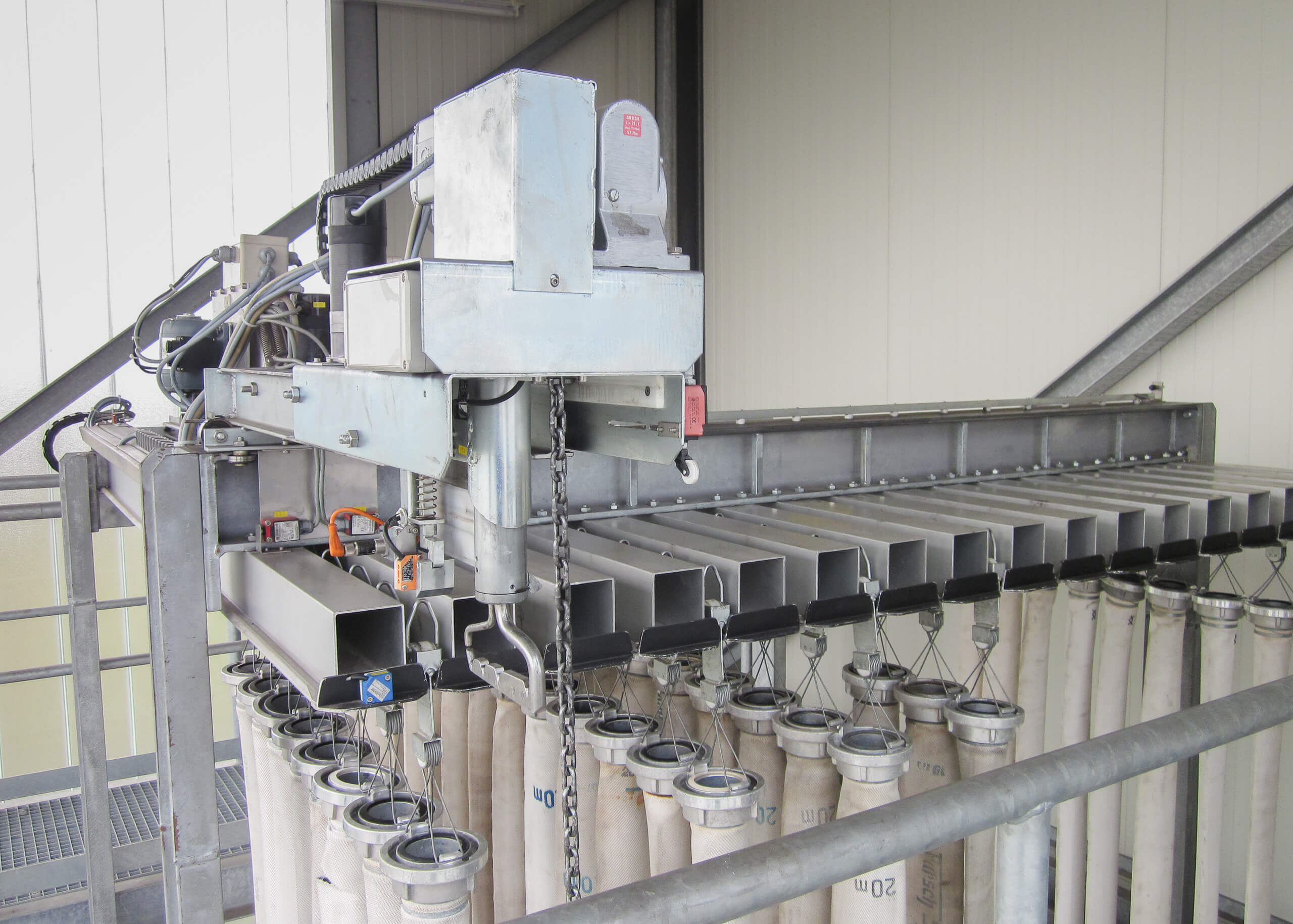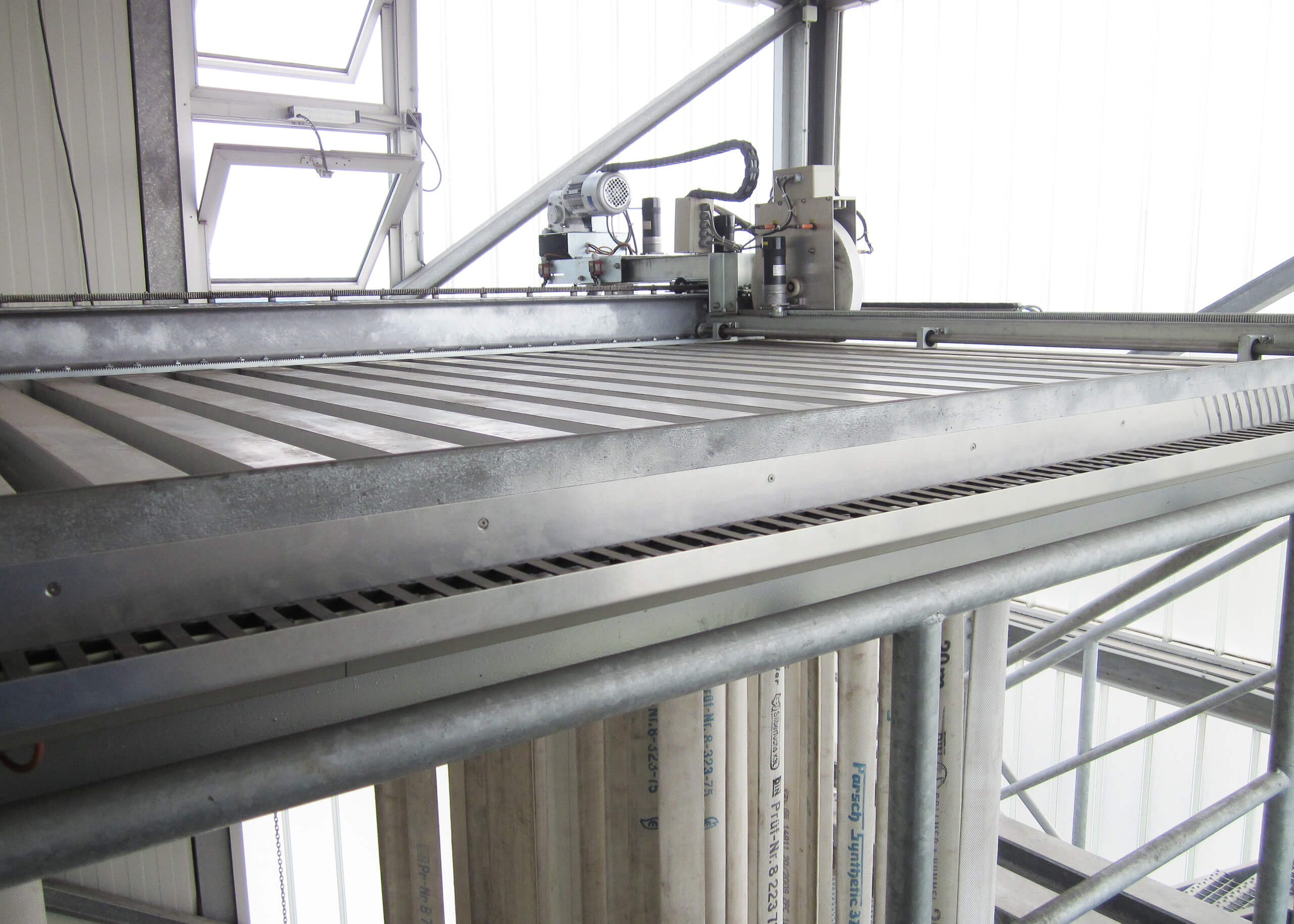
The world’s largest hose suspension system!
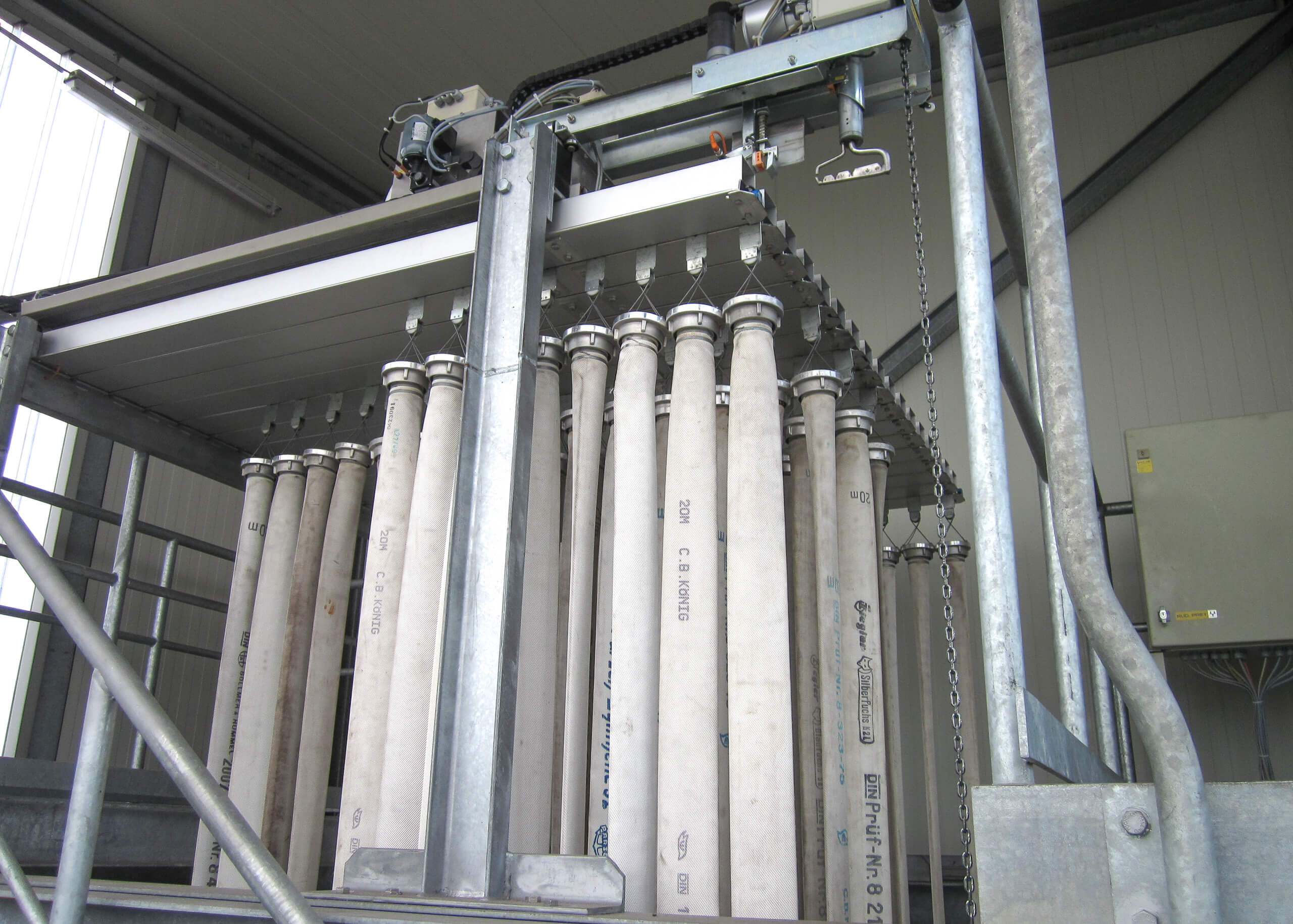
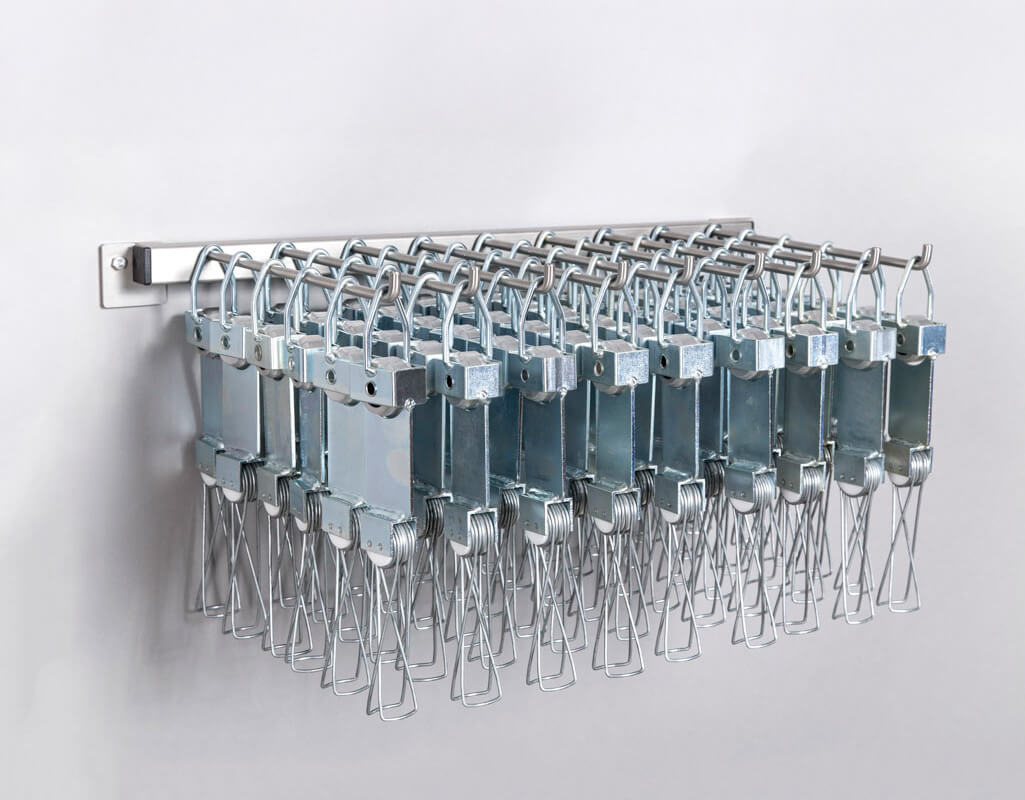
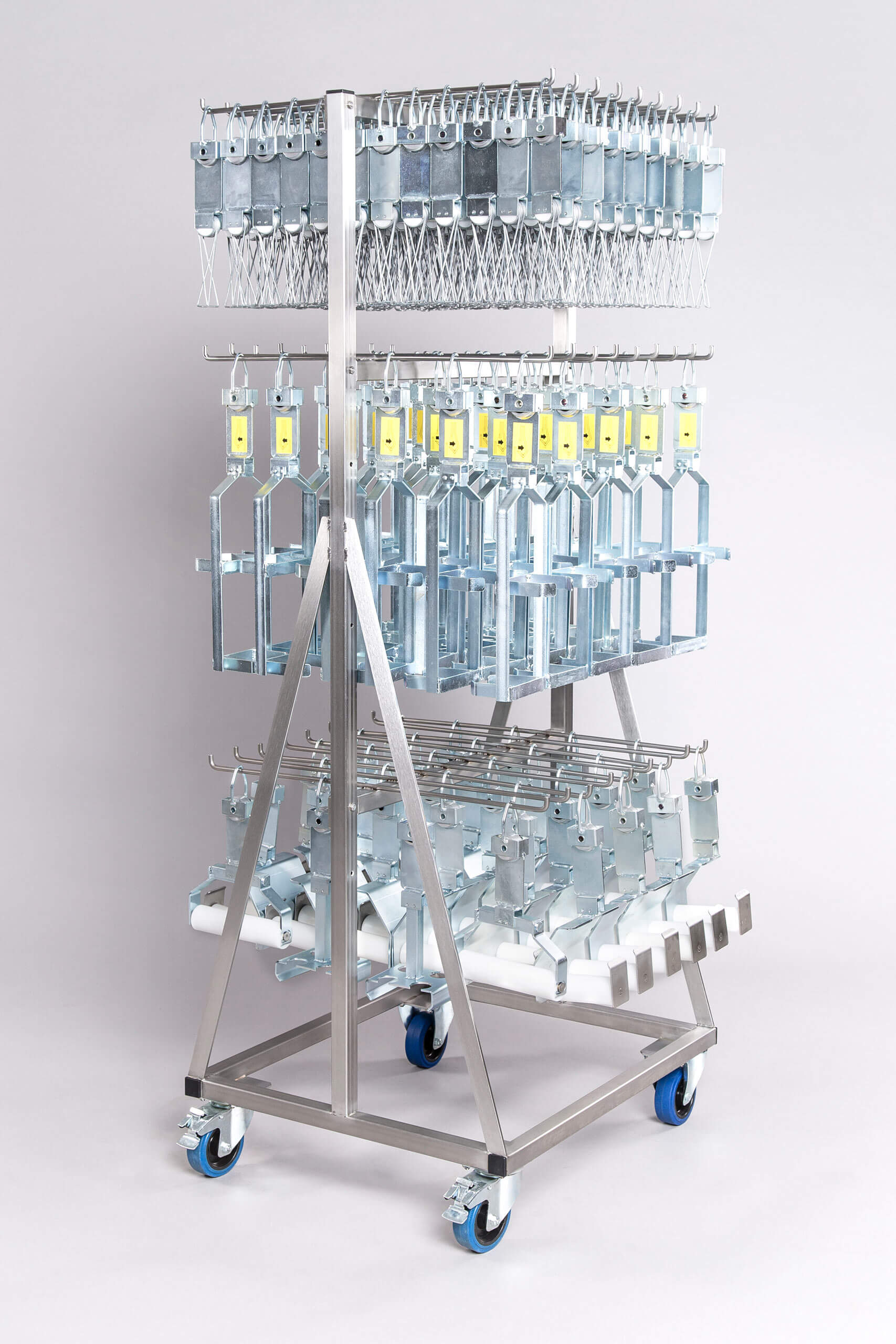
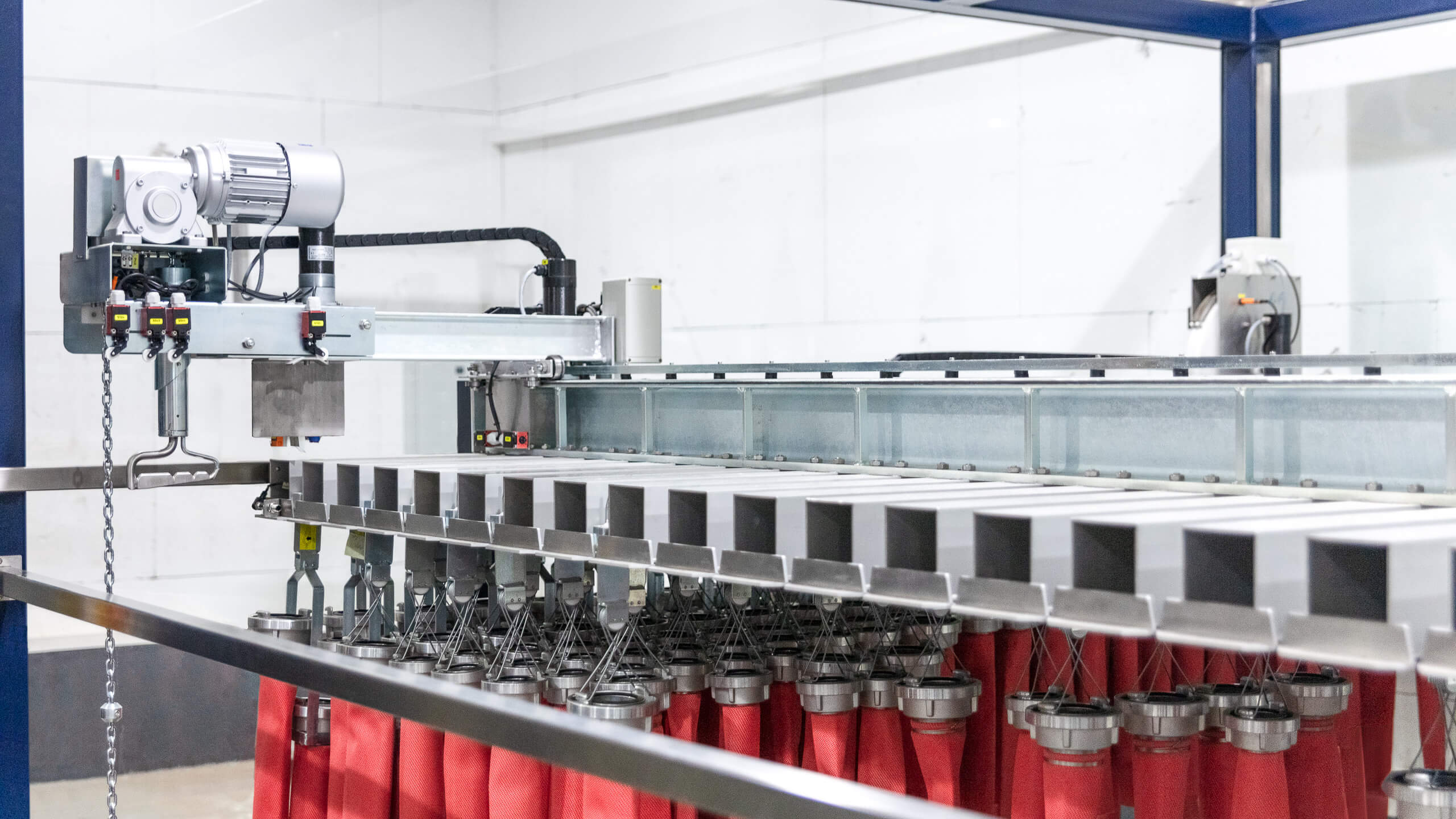
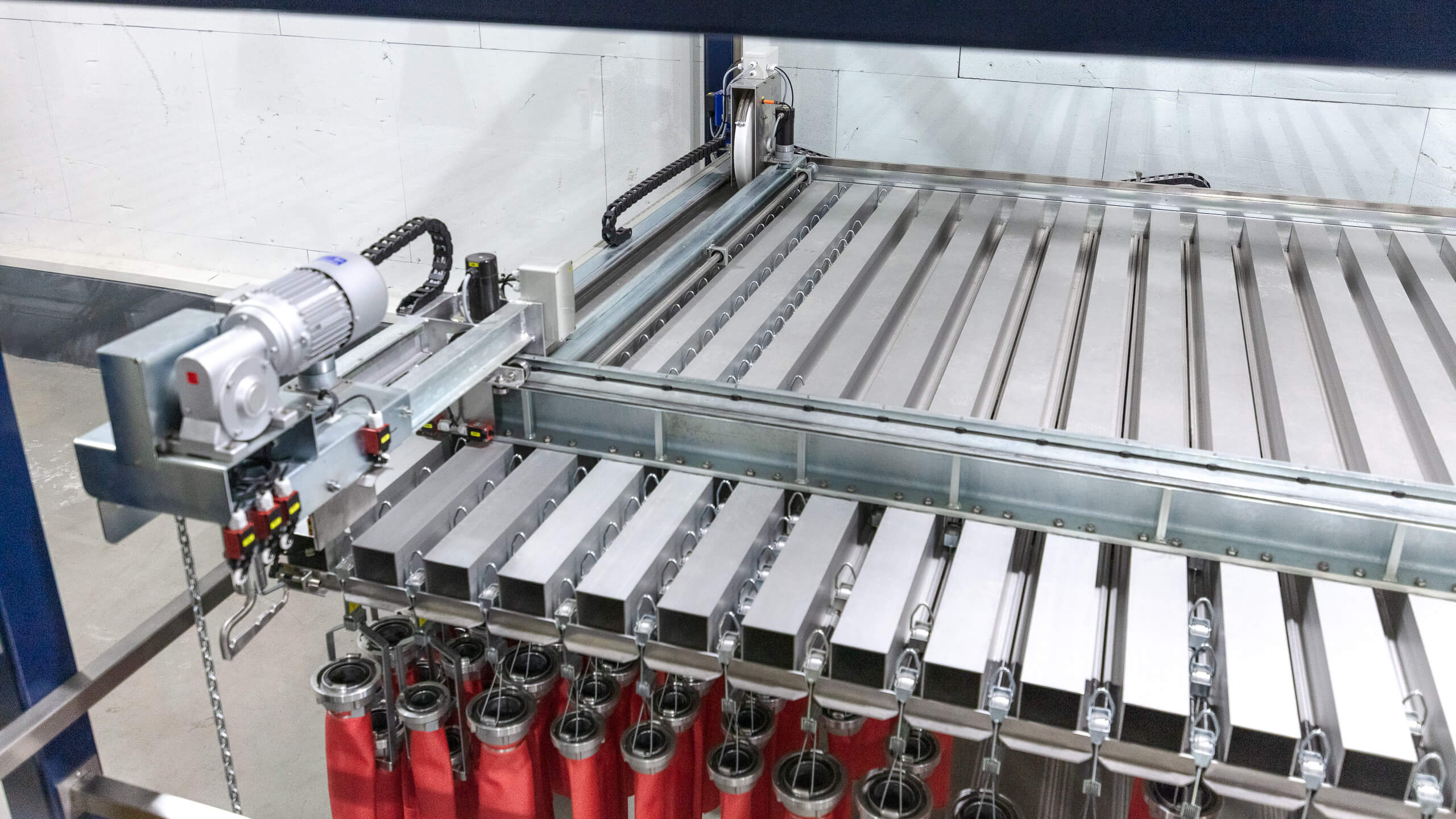
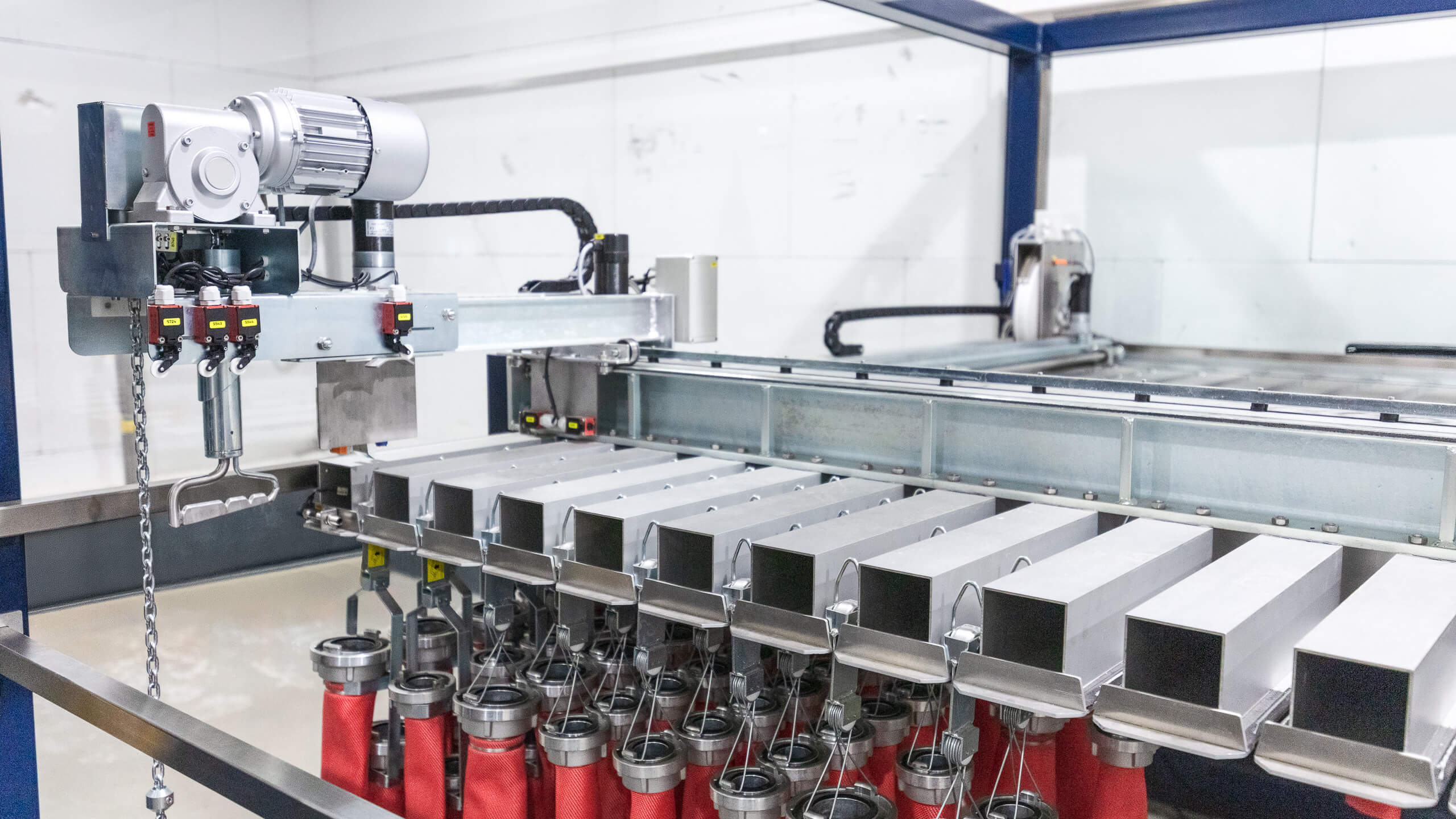
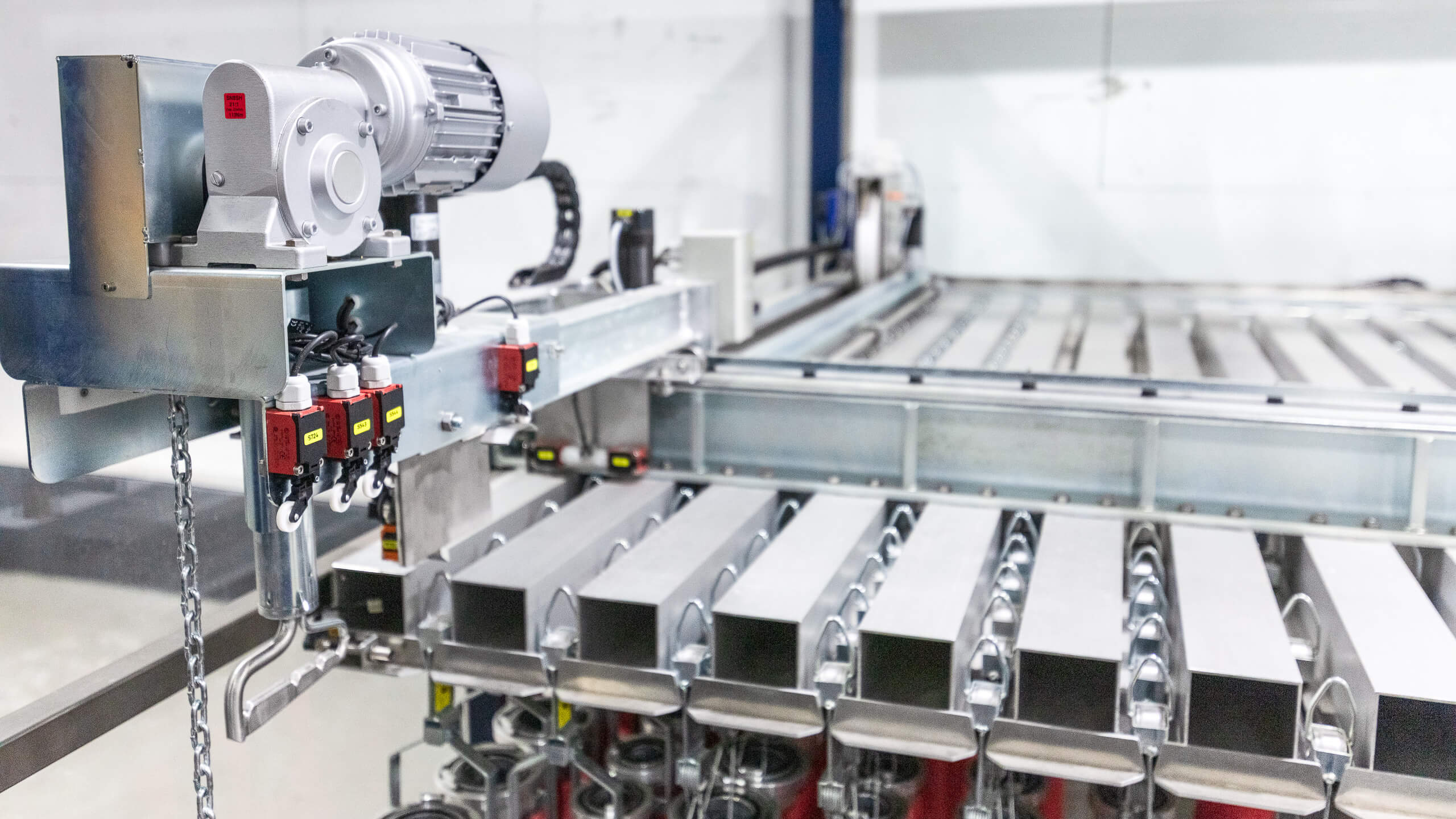
Our ASA-B is the most flexible automatic hose suspension system for large professional fire departments, firefighting technology centers, and service centers equipped with conventional hose maintenance towers.
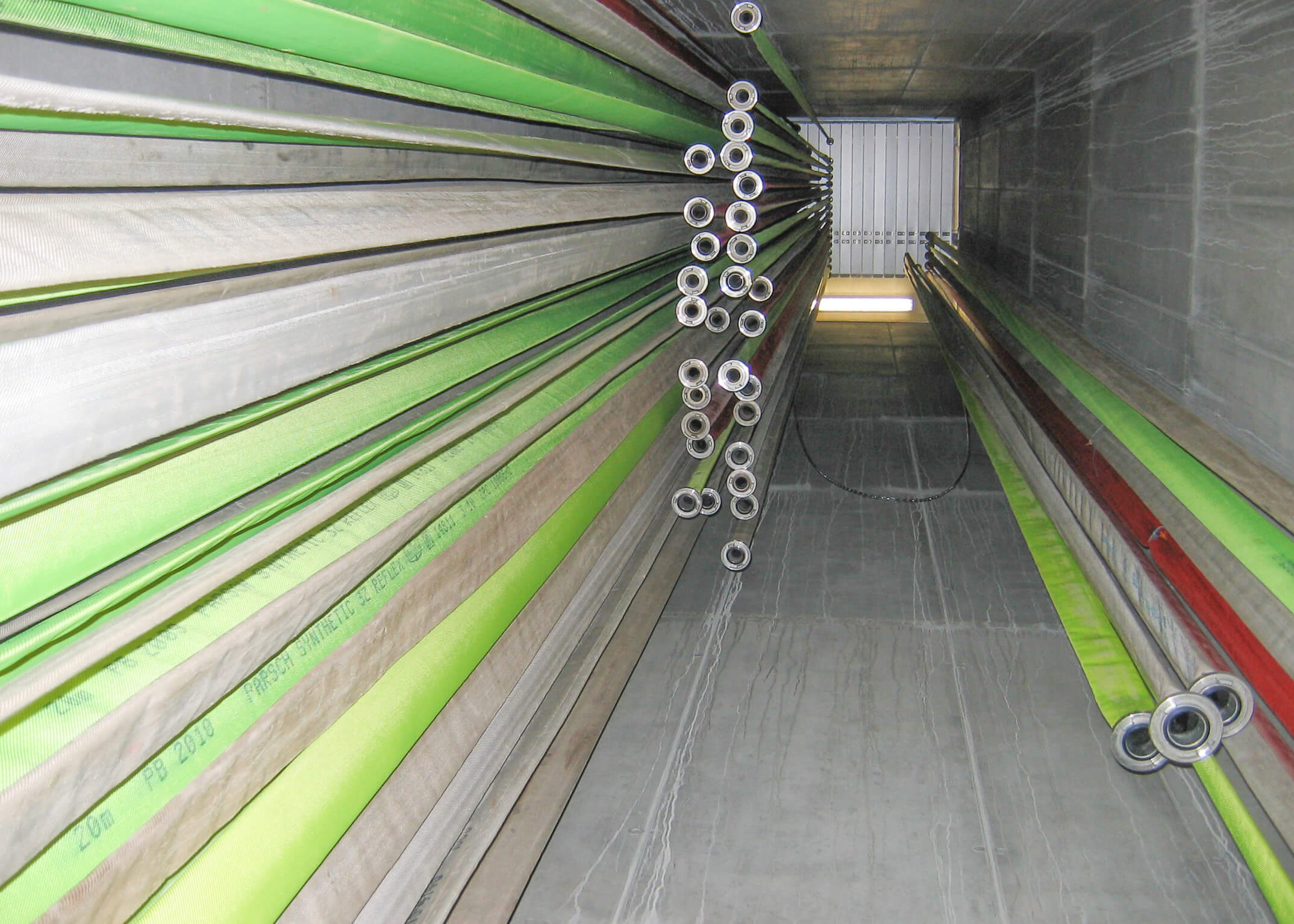
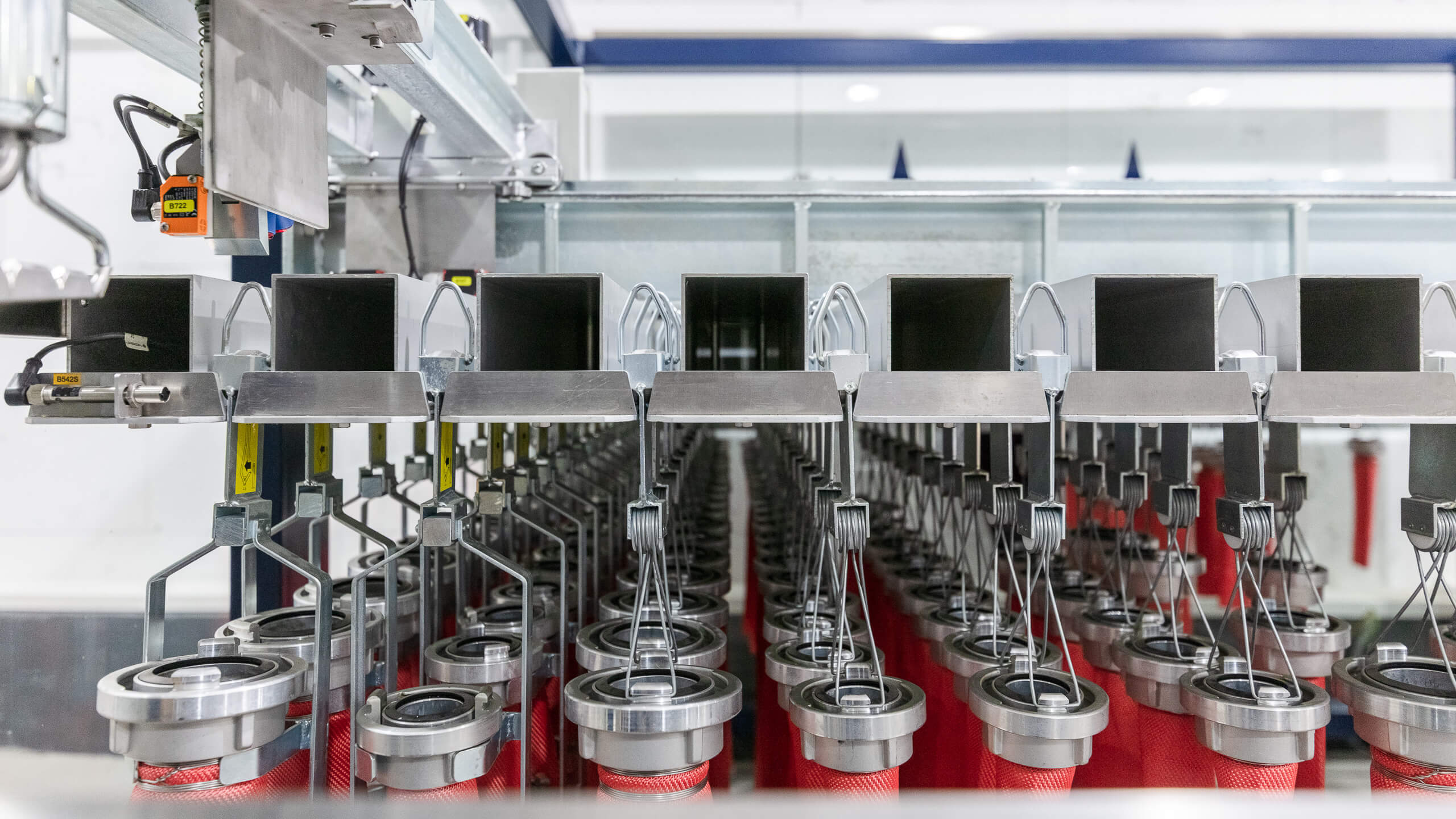
With 2 to 40 lanes and lane lengths of up to 4 m, it achieves a loadingand unloading capacity of up to 80 hoses per hour and stands out for its high space utilization as well as its easy-to-handle, compact adapters.
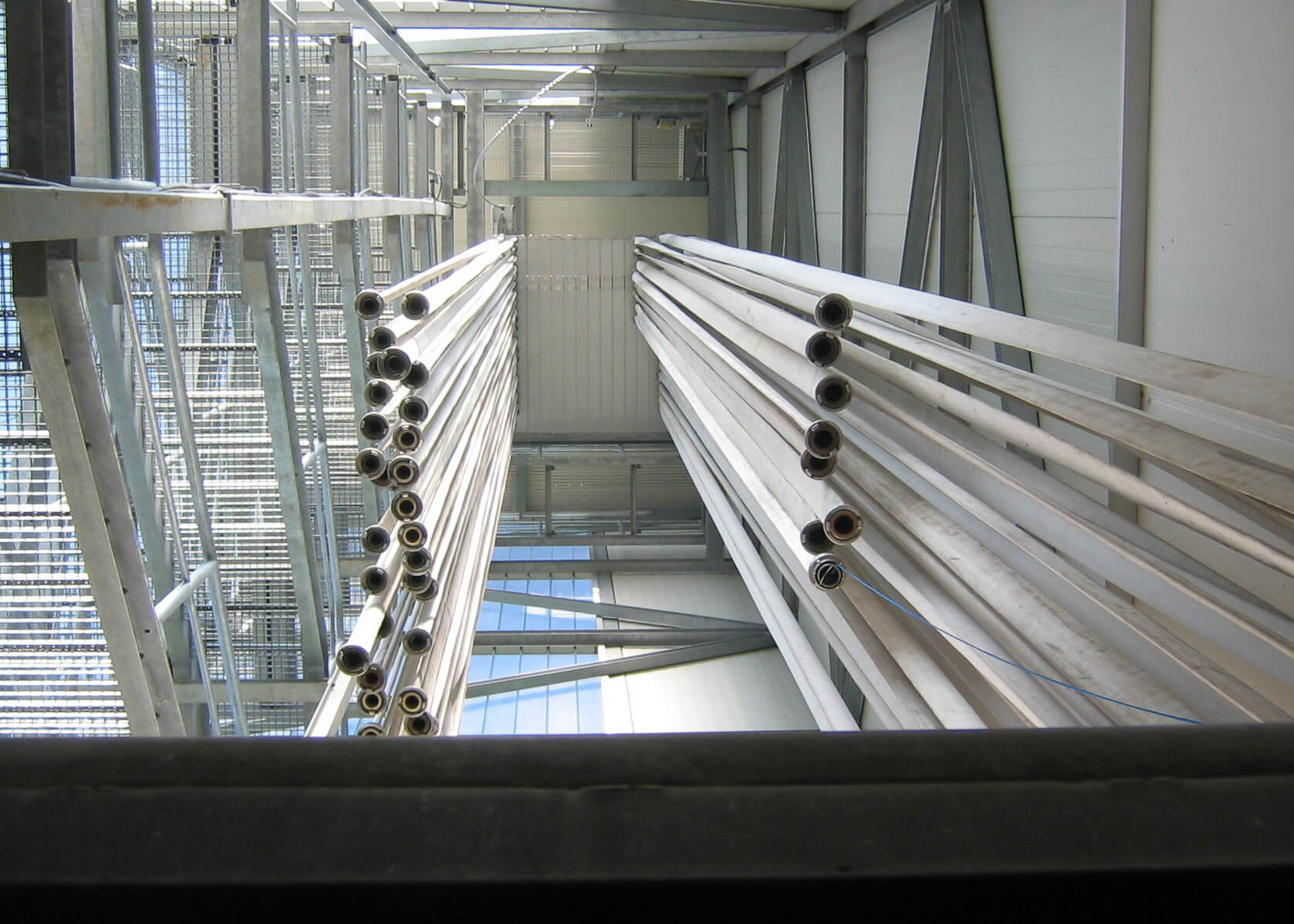
Thanks to the space-saving design, tower construction costs can be significantly reduced; upon request, we also supply the ASA-B as a glazed tower head with a service platform for installation by mobile crane, including structural calculations that can be verified.
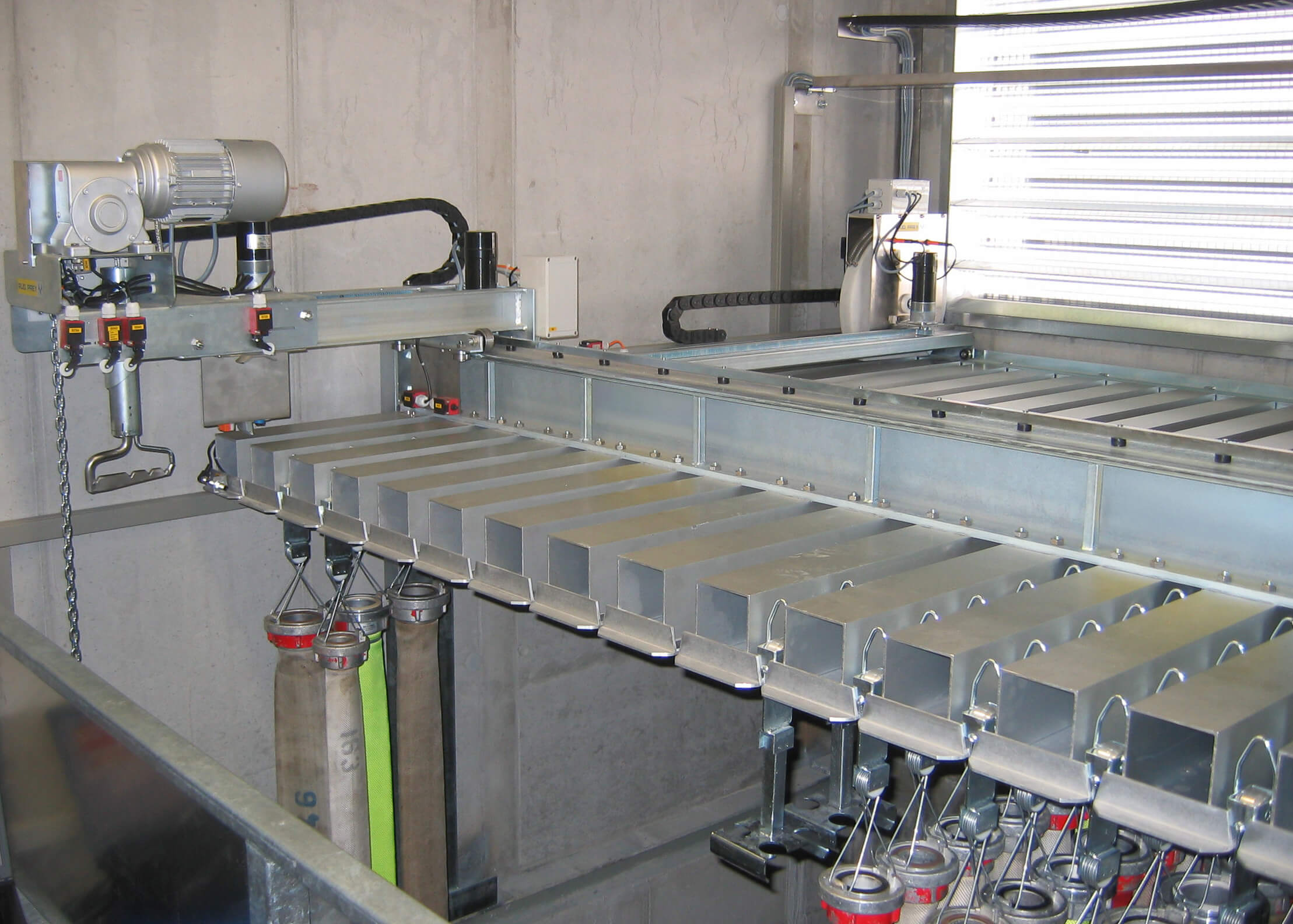
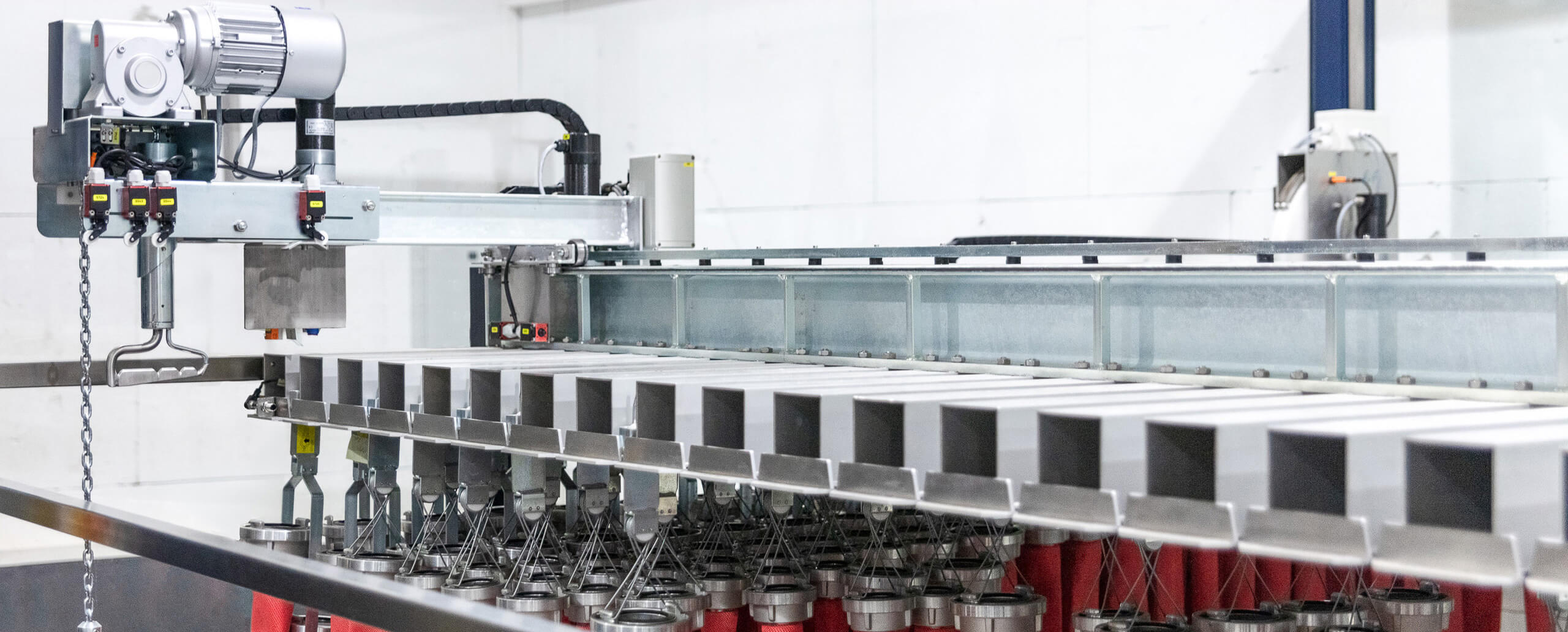
During operation, it is electronically connected to the hose maintenance system and automatically performs hose loading, reeling, and unloading functions.
The world’s largest hose suspension system!
Our ASA-B is the most flexible automatic hose suspension system for large professional fire departments, firefighting technology centers, and service centers equipped with conventional hose maintenance towers.
With 2 to 40 lanes and lane lengths of up to 4 m, it achieves a loadingand unloading capacity of up to 80 hoses per hour and stands out for its high space utilization as well as its easy-to-handle, compact adapters.
Thanks to the space-saving design, tower construction costs can be significantly reduced; upon request, we also supply the ASA-B as a glazed tower head with a service platform for installation by mobile crane, including structural calculations that can be verified.
During operation, it is electronically connected to the hose maintenance system and automatically performs hose loading, reeling, and unloading functions.
| Width | upon request |
| Length | upon request |
| Height | 720 mm |
| Weight | upon request |
| Power connection | 400 V AC / 50 Hz / 2.0 kW |
| Hose Sizes | 150mm/ 110mm / 75mm / 45mm / 25mm |
| Hose Lengths | upon request |
| Types of Hoses | All Common Materials |
| Features | Hauling Hanging, Drying Collecting, Storing Sorting, Filing |
ASA-B: Complete. No compromises!
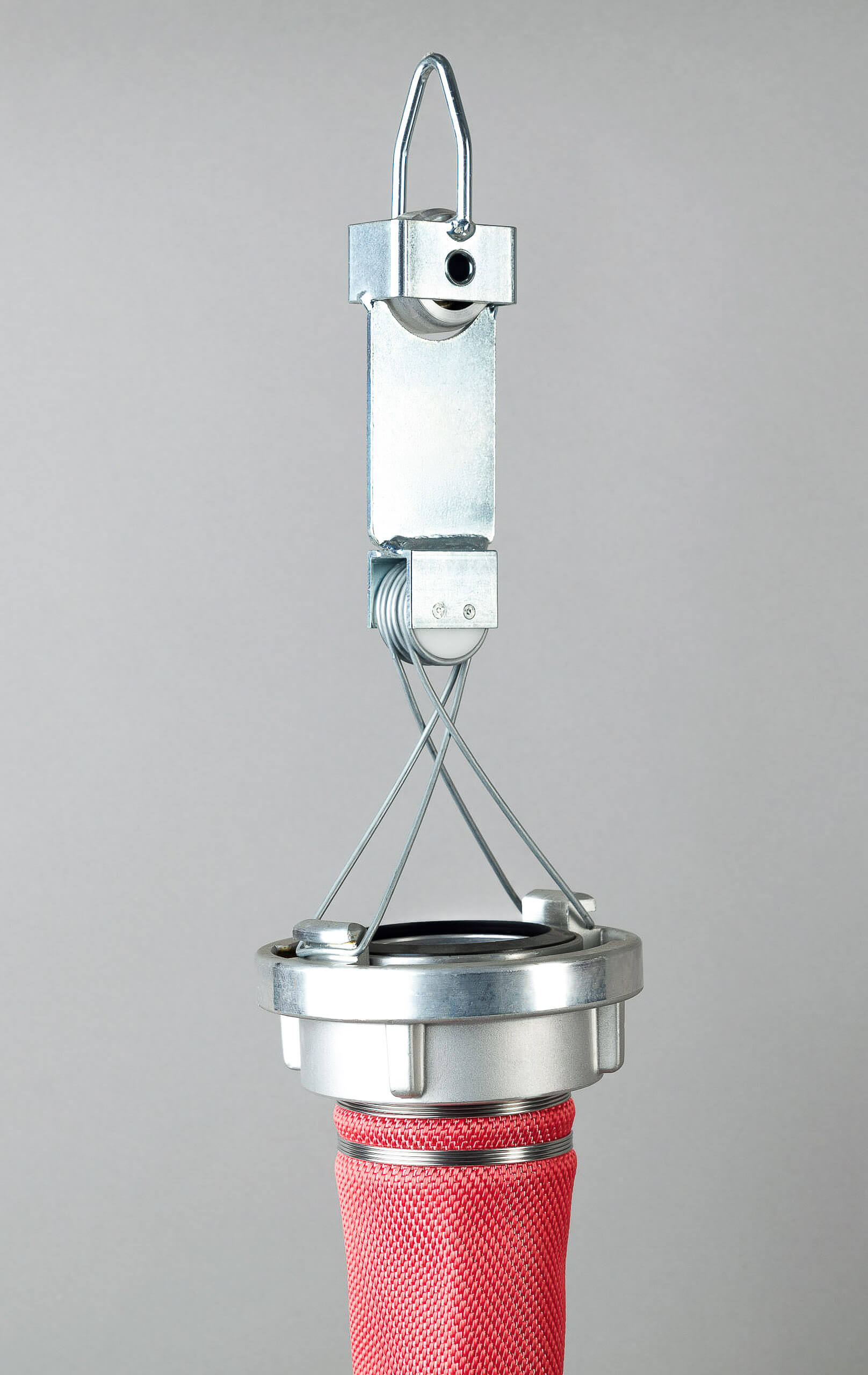
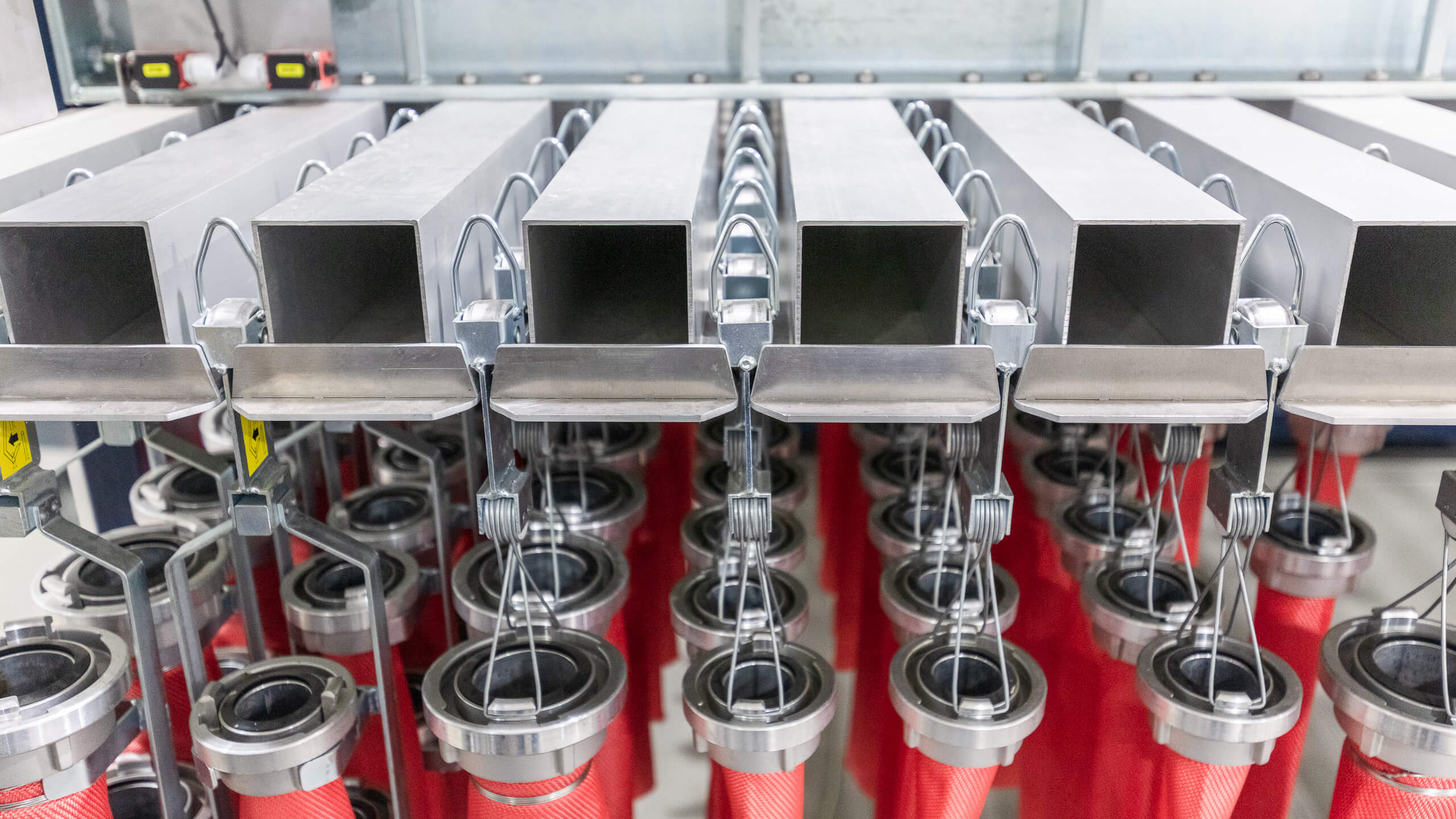
Our ASA-B offers the highest suspension capacity for relatively small tower cross-sections. It can be flexibly mounted on the ceiling, wall, or beams and requires only minimal travel distances, using adapters that are smaller than a 25mm-coupling. For example, a 20-lane ASA-B with 2,500-mm lanes for 1,000 hoses requires only about 9 m² of floor space.
At the same time, it is highly automated, since hanging, sorting, and unloading – apart from inserting and removing items from the adapter – are performed automatically, and the rest is handled via the intuitive, user-guided touchscreen interface. This large screen also displays all status information regarding the system’s operation.
With an average power consumption of 0.05 kW per hanging cycle, our ASA-B is the most energy-efficient hose hanging system in the world – and, with an average throughput of, say, 40 hoses per hour, it consumes less than 900 W.
The integrated hose data management system does not require a separate computer and allows for direct data into all common firedepartment data-management softwares.
ASA-B – Complete. No compromises!
Our ASA-B offers the highest suspension capacity for relatively small tower cross-sections. It can be flexibly mounted on the ceiling, wall, or beams and requires only minimal travel distances, using adapters that are smaller than a 25mm-coupling. For example, a 20-lane ASA-B with 2,500-mm lanes for 1,000 hoses requires only about 9 m² of floor space.
At the same time, it is highly automated, since hanging, sorting, and unloading – apart from inserting and removing items from the adapter – are performed automatically, and the rest is handled via the intuitive, user-guided touchscreen interface. This large screen also displays all status information regarding the system’s operation.
With an average power consumption of 0.05 kW per hanging cycle, our ASA-B is the most energy-efficient hose hanging system in the world – and, with an average throughput of, say, 40 hoses per hour, it consumes less than 900 W.
The integrated hose data management system does not require a separate computer and allows for direct data into all common firedepartment data-management softwares.